Most of Seffner sits on well-drained sand and is mapped Zone X, the minimal-hazard category. Not all of it. A quarter of the grid points checked in FEMA’s flood map data are Zone AE, mostly along the eastern edge at 36 to 47 feet of elevation. The median across the community is about 55 feet. Those low pockets are why water-heater placement is worth thinking about before hurricane season, not after.
Where the AE Pockets Are
- Seffner overall: about 74% Zone X and 26% Zone AE on the grid points checked, with AE along the east edge. The subdivision centers tested were all Zone X.
- Lake Weeks: three of six sample points are AE at the shoreline, with the lake surface at 38 feet and the other points at 43 to 49 feet.
- Thonotosassa: about 17.5% of points are AE and nearly 5% floodway.
- Pemberton Creek: four of ten sampled addresses are AE at 41.5 to 49.9 feet.
This is not a lot-by-lot map. Your own address can differ from the figures above, so look up the property on FEMA’s Flood Map Service Center, and treat a Zone X result as lower risk, not zero. October 2024 showed why: Hurricane Milton dropped 10 to 15 inches of rain across most of Hillsborough County.
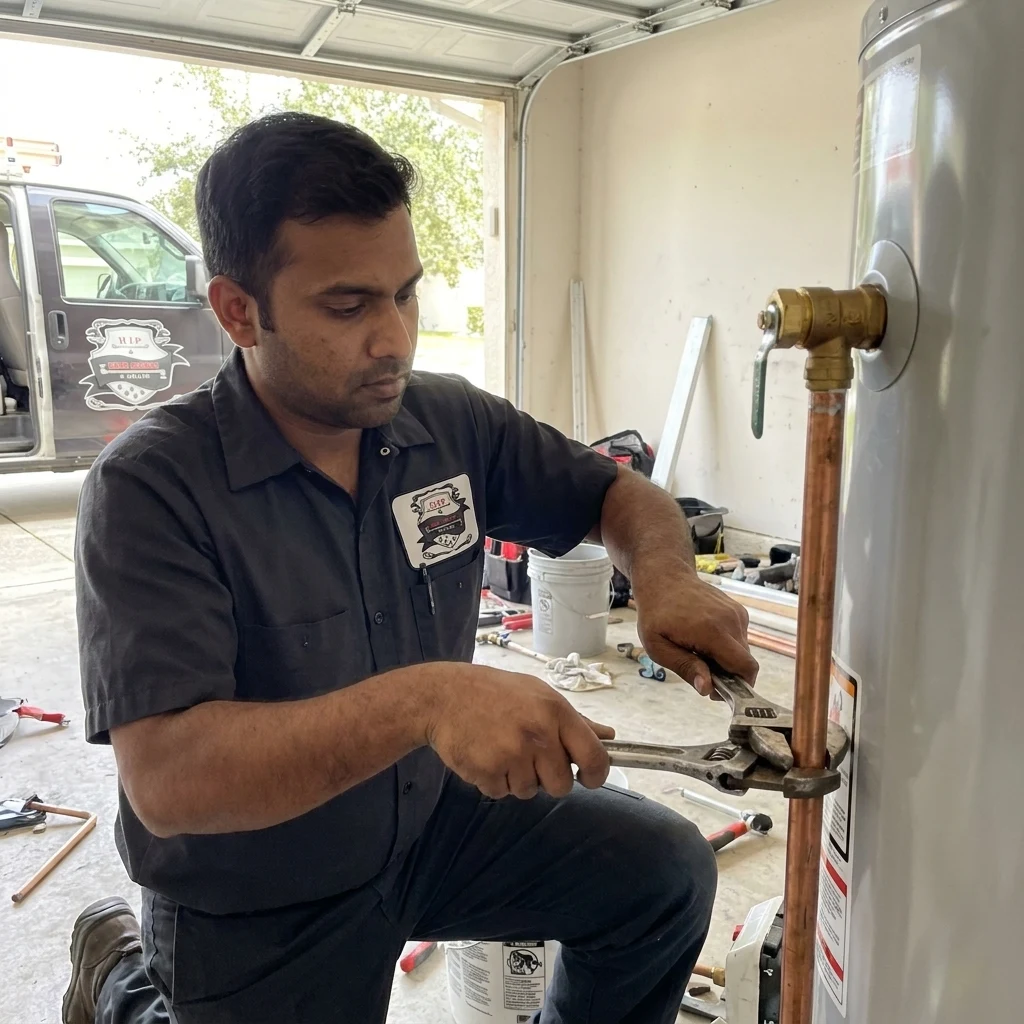
Why the Heater Is Vulnerable
A tank heater usually stands on the garage slab or in a ground-floor closet. Floodwater that reaches the base can wet the burner or the electric elements, the thermostat and the wiring. Equipment that has been submerged generally needs inspection or replacement before it is switched back on, and we would never advise energizing a heater that is standing in water.
What Elevating Means
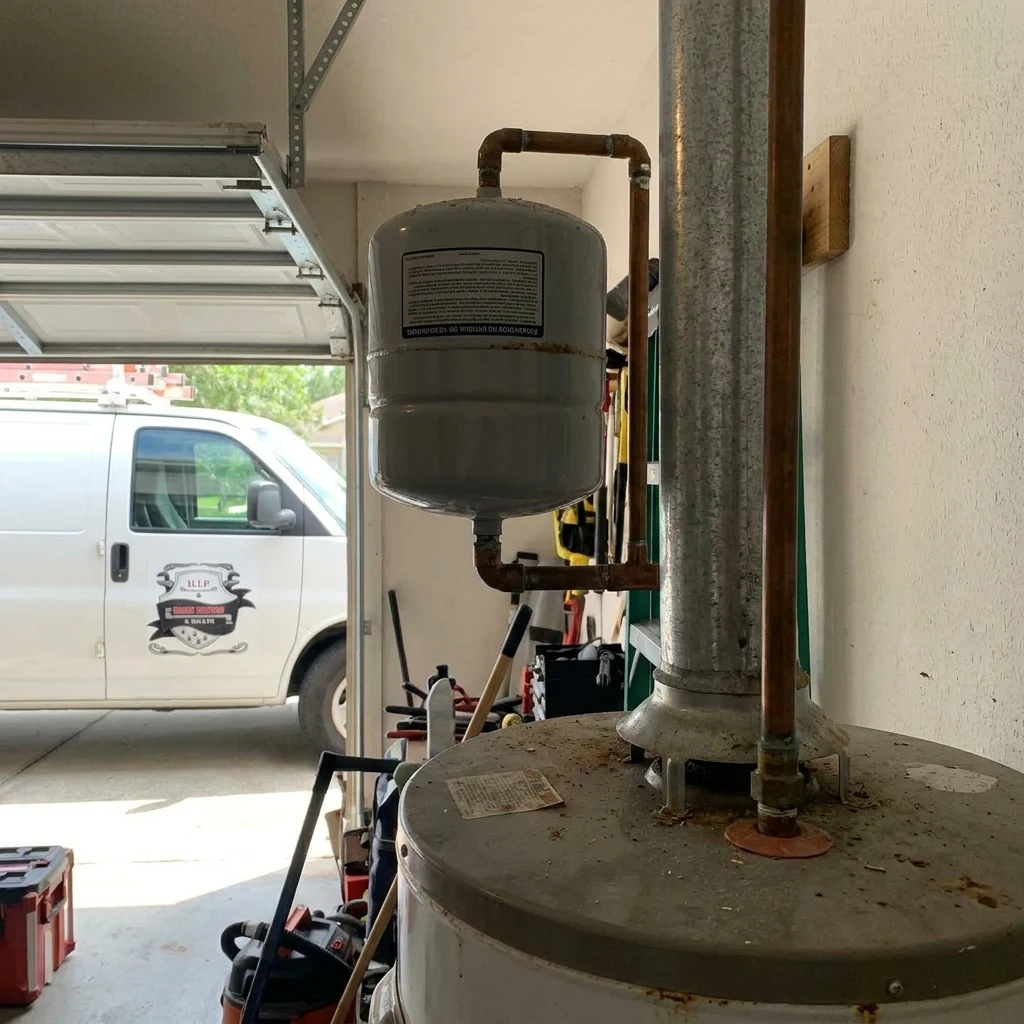
FEMA-based guidance, as summarized by the Building America Solution Center, says to raise the heater on a platform or pad roughly a foot above the base flood elevation, or move it upstairs, and to secure it so floodwater cannot tip it over. In practice that means:
- A solid platform sized to the tank, with strapping to a wall or framing.
- Longer supply and relief piping, including the discharge line to a safe location.
- Rewired or re-run electrical, since the connection moves up with the tank.
- A thermal expansion tank if the system is closed. An expansion tank runs $250–$450.
If raising the heater is not practical, smaller steps still help. Keep boxes and chemicals off the floor around it, make sure the cold-water inlet valve is easy to reach, and know where the breaker is. Photograph the data plate and the surrounding area now, since those pictures make an insurance claim or a replacement quote faster later.
Permits and Inspections
Hillsborough County lists a plumbing final inspection for water heater replacement, and its exempt-work page does not exempt altering, replacing or relocating water supply piping. Moving a heater to a platform or another floor is the kind of change that falls in that second group. Ask county Building Services at (813) 272-5600 how it applies to your project, and ask whoever does the work who handles the paperwork.
After the Water Recedes
Photograph the heater, the base and the water line before anyone touches them. Do not reset the breaker or run the heater until it has been looked at. Check the main shut-off and the angle stops for silt, and run each tap until the water clears. If lines or the meter box took on floodwater, tell the county utility. Flood-damaged appliances are an insurance matter too, so keep the photos and any receipts.
What It Costs and When to Replace
A tank replacement installed is $1,200–$2,500; a tankless install is $2,200–$3,500. Raising or relocating adds labor beyond those figures, which we price on site. If your current heater is past 10 years and sits in a low spot, replacing it during an elevation project beats doing both separately. Our repair or replace guide and water heater service page lay out how we decide.
For place details, see the Lake Weeks page and the Pemberton Creek page. After a storm, the emergency plumbing page covers dispatch, and the cost guide lists typical prices.
Heater in a low garage or closet?
Send a photo of where it stands and the nearest shut-off. We will tell you whether raising or relocating it is practical, and what a replacement would involve first.
CALL 813-733-7188Flood-Zone Water Heater Questions
Most of Seffner is mapped Zone X, but about a quarter of the grid points checked are Zone AE, mostly along the eastern edge near Lake Weeks and toward Thonotosassa. Check your specific address on FEMA’s Flood Map Service Center, since maps vary lot by lot.
FEMA-based guidance cited by the Building America Solution Center is about one foot above base flood elevation, on a platform, or relocated upstairs, and strapped so it cannot tip. Your actual figure depends on your flood zone and local rules, so verify with the county.
Not until it has been inspected. If floodwater reached the burner, elements, thermostat or wiring, the heater may be unsafe. Turn the power off only if you can do it without standing in water, and call a licensed plumber.
Hillsborough County treats replacing or relocating water supply piping as non-exempt work, and lists a plumbing final inspection for water heater replacement. Call county Building Services at (813) 272-5600 to confirm what your project needs.