“The main” can mean four different pipes, depending on who is talking. That confusion costs people money: they call a plumber for a street problem, or wait on the county for a clog inside the house. These definitions come from how the systems are laid out; they do not say who pays for what, because that depends on the utility’s own rules.
The Water Side
Water travels in a line from the street to your faucets. The water main is the large pipe under the road, run by the utility. A smaller service line branches off it and runs underground to the meter, which sits in a ground-level box near the curb or lot edge. Past the meter is the house supply line, the pipe that feeds the home, with a main shut-off valve that closes everything at once.
The Sewer Side
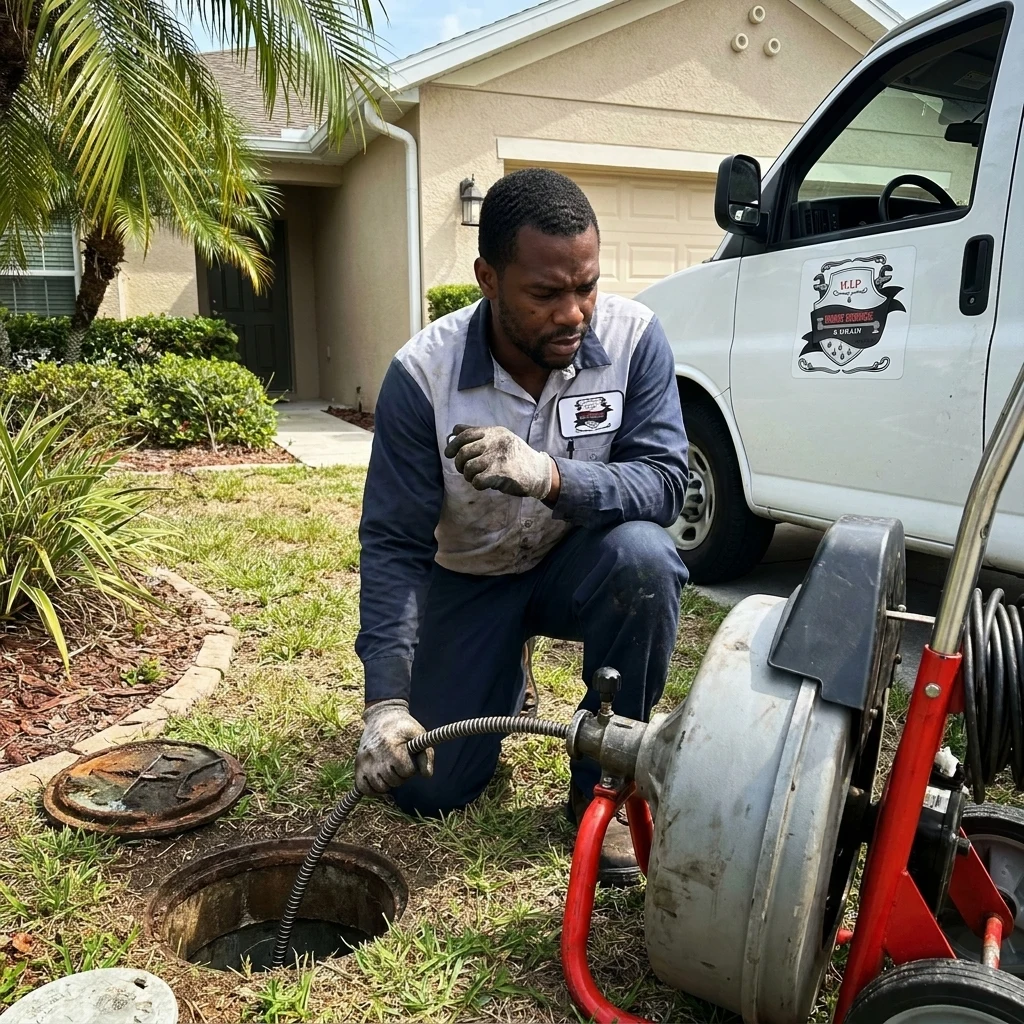
Drain water flows the other way. Every fixture empties into a building drain inside the house, which exits as the sewer lateral (also called the sewer line or service line) heading to the sewer main in the street. A cleanout is a capped access pipe on that lateral, put there so a technician can feed a cable or camera in without pulling a toilet.
| Term | What it is | How to find it | Who to call when it fails |
|---|---|---|---|
| Water main | Large pipe under the street | Not visible; hydrants and valve covers mark the route | Water Resources, (813) 307-1000; after hours (813) 744-5600 |
| Service line | Pipe from the main to the meter | Runs underground toward the meter box | Ask the utility first |
| Meter | Measures use; has a leak indicator | Ground box near the curb or lot edge | The utility |
| House shut-off | Closes water to the whole house | At the meter or where the pipe enters the house | A plumber replaces a failed valve |
| Sewer lateral | House drain to the street sewer | Follow the cleanout | A plumber for a clog; the county if sewage is in the street |
| Cleanout | Capped access pipe | 3–4 inch cap near the house or lot edge | A plumber |
| Sewer main | Public sewer in the street | Manholes mark it | Water Resources |
Find Your Meter and Cleanout in Ten Minutes
- Walk the front of the lot and look for a rectangular lid at ground level, usually marked “water.” Lift it with a screwdriver and a glove. The dial inside is your meter.
- Check the exterior wall nearest the street for a white or black capped pipe, about 3 to 4 inches wide. That is usually the cleanout.
- Find where the water pipe enters the house, often by the heater in the garage. The valve there is the house shut-off.
- Photograph all three and save the images in your phone for the next emergency.
What the County Records Say About Seffner
County GIS lists the “Valrico” wastewater area over about 69% of the Seffner points sampled, with the Falkenburg basin to the west. A service-area outline is not proof that a particular lot is connected. Six plats, among them Thousand Oaks Executive Estates, Hickory Lakes Manor and Seffner Park, show no mapped county sewer lines, so some addresses may be on septic. We do not service septic tanks or drainfields, so confirm your system before booking a drain visit.
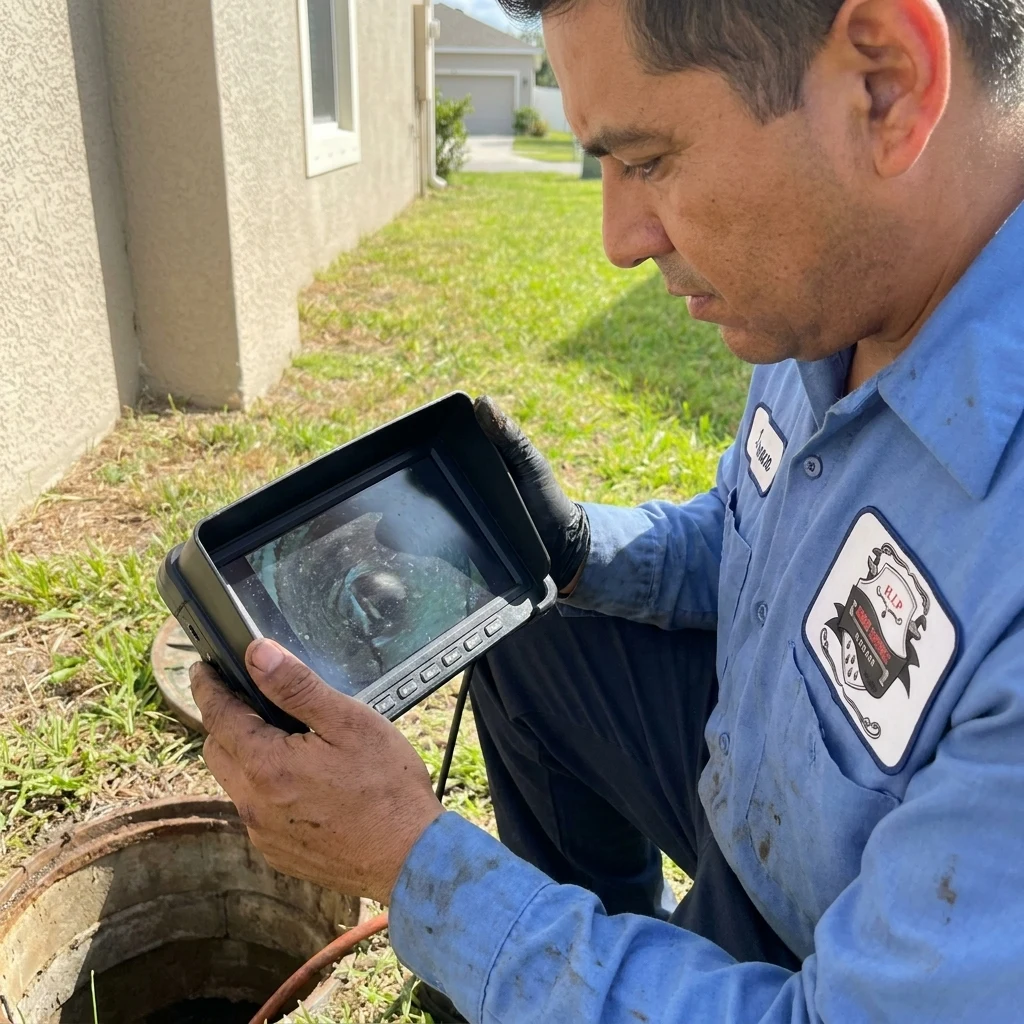
The street pipes are mostly modern plastic: about 97% of mapped sewer segments and 87% of mapped water mains touching Seffner are PVC. That is why a plumber starts inside the house and at the cleanout with a cable or camera, and calls the county only when the camera shows the trouble is out at the main.
Who to Call, in Order
- Sewage backing up into the house: stop using water, then call Water Resources at (813) 307-1000. The county takes these by phone; there is no online form.
- Water gushing in the street or a main break: call the same utility; after hours, (813) 744-5600.
- Slow drains, a clog or a leak inside the house: call a plumber. See drain cleaning and camera inspection or emergency plumbing repairs.
- A line that must be dug up or lined: that is a licensed underground utility contractor, not us.
Where a utility’s responsibility ends and a homeowner’s begins depends on that utility’s own rules, which differ between the county and the cities of Tampa, Temple Terrace and Plant City. Ask Water Resources before you approve any excavation. For prices on common work, see the Seffner plumber cost guide, and for Old Seffner’s older lots the Old Seffner page adds context.
Not sure which pipe you are looking at?
Send a photo of the lid or cap and where it sits in the yard. We will name it and tell you whether it needs a plumber, the county or an underground utility contractor.
CALL 813-733-7188Pipe Terminology Questions
The water line brings clean water in from the street to your faucets. The sewer line carries wastewater out from your drains to the street sewer. They are separate pipes, run in different trenches and fail in different ways, so a leak on one does not mean trouble on the other.
A cleanout is a capped access pipe on the sewer lateral. It lets a technician run a cable or camera without removing a toilet. If your home has one, knowing its location can shorten a backup visit and, in some cases, lower the cost.
Hillsborough County asks residents to phone Water Resources at (813) 307-1000 for a backup into a home. Stop running water, then call. A plumber can clear and camera the house side, and will tell you if the problem appears to be at the street main.
County GIS shows service areas, not individual connections, and some plats show no mapped sewer lines. Check a utility bill, ask Water Resources, or look for a septic tank lid or drainfield in the yard. We do not service septic systems, so confirm before booking.