Seffner is not an old town in the sense of brick streets. Its housing is mostly 1970s through 2000s. But the Census counts 42 homes built before 1940, 113 in the 1950s and 165 in the 1960s, which together are about 10% of the housing, and another 687 from the 1970s. County parcel records put 37% of homes with a recorded build year before 1980. Those houses are where original pipe is most likely still in service.
What Was Common Then (and What to Treat as a Guess)
We cannot tell you what is behind your walls without looking, so read this as a map of what plumbers commonly find, not a statement about any house. Single-story ranches of the 1950s through the 1970s often had galvanized steel or copper supply lines and cast-iron drains, with a vent stack through the roof. Later homes moved to PVC and ABS drains and copper or CPVC supply.
| Pipe | Typical life (trade sources) | How it fails |
|---|---|---|
| Galvanized steel supply | Average 40–50 years | Rusts inside, narrowing the bore; low pressure and orange water |
| Copper supply | 50–70 years | Pinholes, pitting, green crust at joints |
| Cast-iron drain | 60 above ground; 50–60 below | Scale, thinning, cracked hubs, roots entering joints |
| ABS or PVC drain | 50–80 years | Cracks from impact or heat; solvent joint failures |
The galvanized figure comes from a home-inspection source; the others come from the InterNACHI life-expectancy chart. These are averages, not expiry dates.
How to Check Without Opening a Wall
- Find an exposed supply pipe near the heater or under a sink. Scratch it with a coin: silver-gray is galvanized steel, copper-colored is copper, and the plastic is obvious.
- Try a magnet. It will stick to galvanized steel but not to copper or plastic.
- Run the hot tap first thing in the morning. Rust-colored water that clears quickly points at corroding steel.
- Look for polybutylene. Gray (sometimes off-white) plastic supply used from about 1978 to 1995 fails mostly at its plastic fittings. Hickory Hill, built mainly in 1985–88, is an example of the era, so it is worth checking in homes from that period.
Drain Stacks: What Cast Iron Does Over Time
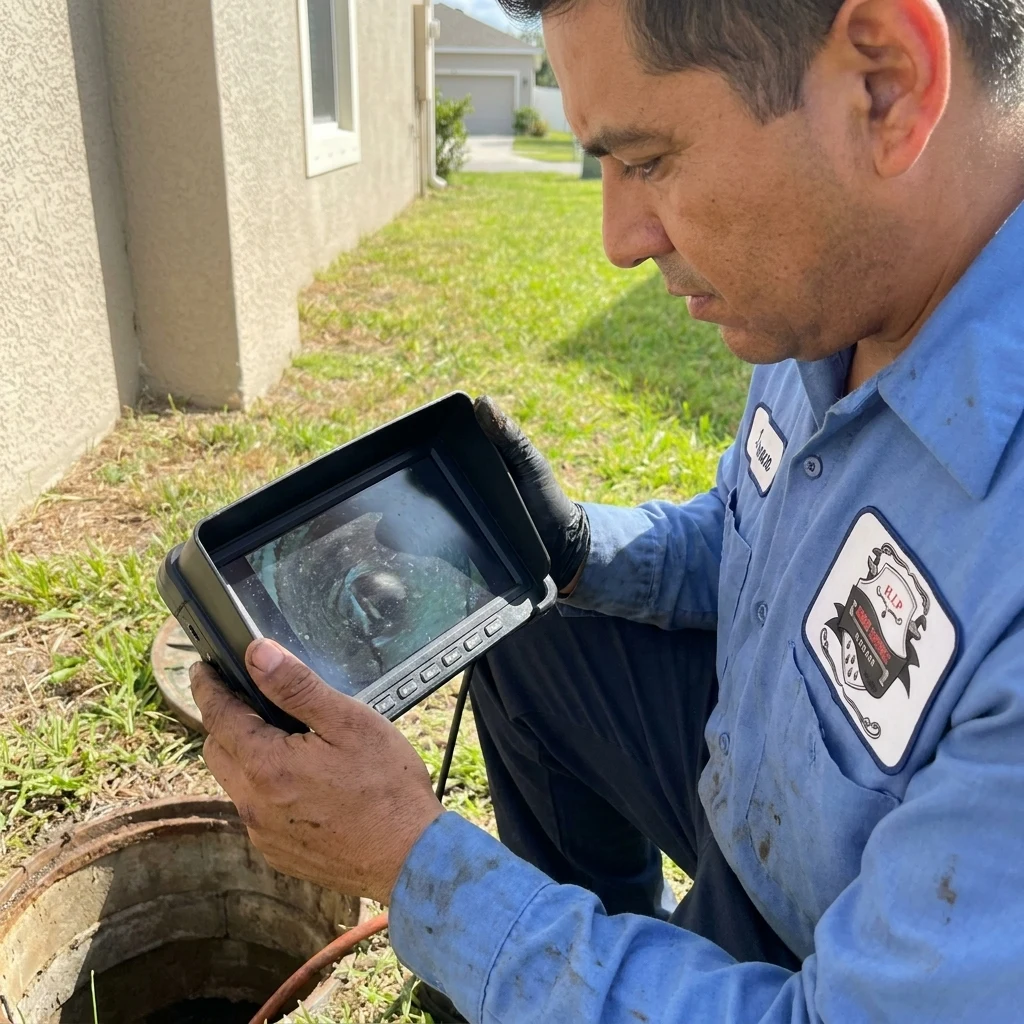
Cast iron rusts from the inside, builds up scale and leaves a rough surface that catches grease, paper and roots. A recurring slow drain, gurgling or a sewer smell near an old stack is a reason to run a camera, not just a cable. Our drain cleaning and camera inspection work starts with the camera, which runs $150–$300 as a stand-alone visit and is often credited the same day. Hydro jetting on thin cast iron needs that look first, because pressure can finish off a weak pipe.
Roots are the other common finding. They look for moisture at pipe joints and can work in at hubs or cracks, then grow into a mass that blocks the line. Hydro jetting with a camera before and after runs $400–$700 and clears roots from the bore. It does not repair the joint they used to get in, so a root problem tends to return until the joint is addressed.
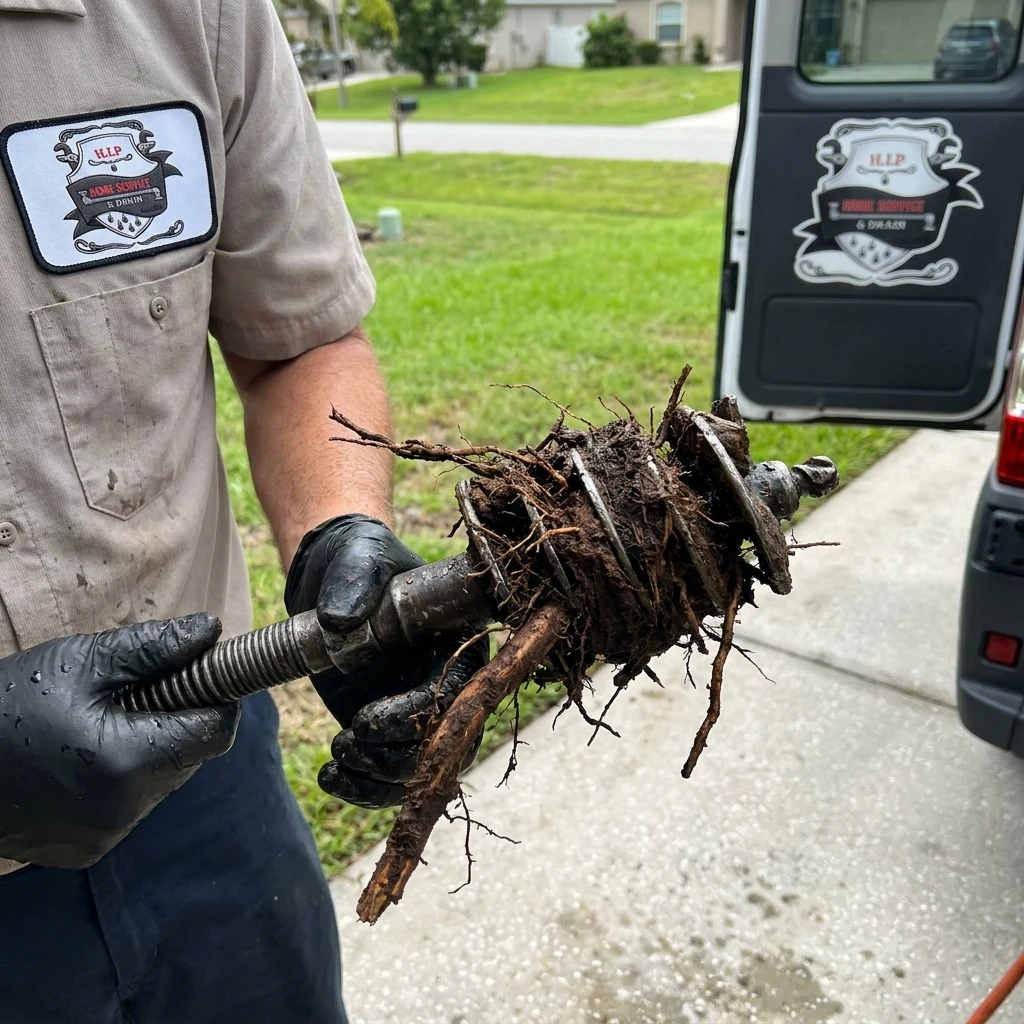
If the camera shows a cracked or collapsed section, cleaning is not the fix. We say so and point you to a licensed underground utility contractor for excavation or lining; we do not do that work.
When a Repipe Quote Makes Sense
Pinholes in several places, polybutylene with plastic fittings, or galvanized steel with whole-house pressure loss justify a quote; a single failed joint does not. A whole-house PEX repipe runs $4,500–$12,000, and rerouting one line is $1,200–$2,800. Concealed leak repair and supply replacement are permit-inspected work in Hillsborough County. For anything over about $1,500, get a second quote. Read our repiping page for how we scope it and leak detection to find pinholes first.
The Old Seffner page covers the oldest lots, near Lenna Avenue and MLK Boulevard, and the cost guide lists typical prices. If pressure is your complaint, start with the pressure diagnosis order.
Original pipes and symptoms to match?
Rusty water, slow drains and falling pressure in the same older house are worth a look. We can camera the drain and test the supply, then give you a written scope and price.
CALL 813-733-7188Older-Pipe Questions From Seffner Homeowners
Scratch an exposed section and look for silver-gray metal, then test with a magnet: it sticks to galvanized steel but not to copper or plastic. Rusty water at first use and gradually falling pressure are the usual symptoms. A plumber can confirm it quickly.
The InterNACHI chart lists about 60 years above ground and 50 to 60 below. Condition varies by water, soil and use, so a camera inspection is the dependable way to judge a particular line, rather than going by age alone.
It can be in homes built roughly from 1978 to 1995. The gray plastic pipe mostly fails at acetal fittings and has been linked to chlorine. Not every home from those years has it, so check exposed pipe before assuming either way.
No. A single failed joint or fitting is a repair. A repipe quote makes sense when pinholes appear in several places, pressure drops house-wide from internal rust, or polybutylene is present. Get a second quote on anything above about $1,500.