Search for “Seffner hard water” and you will find confident numbers. Hillsborough County does not publish one. Most of Seffner is served by the county’s South-Central system, and the 2025 water quality report it issues says a good deal about disinfection and metals, and nothing about hardness. This article sticks to what is on paper and says plainly where the paper stops.
What the County’s 2025 Report Says
- Source: Floridan Aquifer groundwater plus treated supply from Tampa Bay Water.
- Disinfectant: chloramines, averaging 3.8 ppm, with a range of 0.03 to 6.8 against a limit of 4.0.
- Corrosion control: an inhibitor added to limit lead and copper leaching from household plumbing.
- Copper: 0.43 ppm at the 90th percentile, against an action level of 1.3.
- Lead: 0.66 ppb against an action level of 15, with no lead service lines found.
- Also listed: sodium 39 ppm and fluoride 0.73 ppm.
In short, the metals numbers are well under the action levels. Chloramine is a longer-lasting disinfectant than chlorine, which is why utilities use it, and it is why some rubber and plastic parts may age faster than they would otherwise.
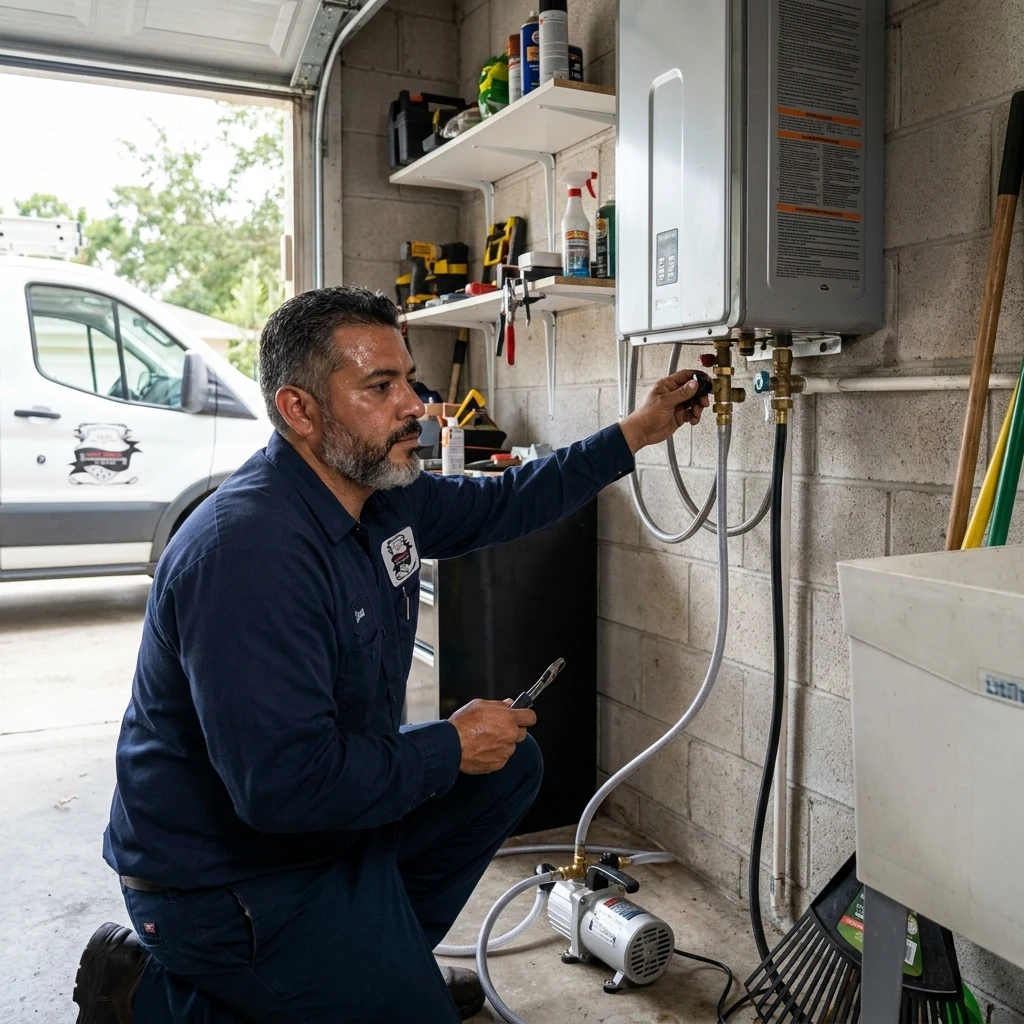
What It Does Not Say: Hardness
Neither the county nor Tampa Bay Water publishes a hardness figure for this system, so anyone quoting a number for county-served Seffner homes is guessing. Two neighbors do publish theirs: the City of Tampa reports 211 mg/L (12.3 grains per gallon), and Temple Terrace’s master plan says finished water is over 300 mg/L. Those are different wells and treatment, so they show the range nearby, not what comes out of a Seffner tap.
The USGS scale puts 121 to 180 mg/L in the “hard” class and anything over 180 in “very hard.” It also notes that scale can clog pipes and lower the efficiency of electric water heaters. Divide a mg/L figure by about 17.1 to get grains per gallon.
Read the Report Yourself
The county posts each system’s annual report on its water quality reports page; South-Central is public water system ID 6290787. Check which system serves your address first. About 71% of the Seffner points sampled in county GIS fall inside South-Central, while ten points on the east edge show no county polygon, so provider is unconfirmed for some addresses there. Call (813) 307-1000 to confirm.
How to Learn Your Own Hardness
- Buy a test strip kit or send a sample to a lab, and ask for the result in mg/L or grains per gallon.
- Read the scale: white crust on aerators, spotting on glass and mineral rings in the tank when it is drained.
- Call the county water quality hotline at (813) 264-3835 and ask what they can tell you for your address.
- If you are on a private well, test that water separately; the county report does not cover it.
Where Chloramine May Show Up in Repairs
Plumbers commonly point to rubber parts as the ones that fail early in chloraminated systems. The county has not published a study, so treat it as a plausible factor, not a proven one.
| Part | Why it may wear faster | Typical repair cost |
|---|---|---|
| Toilet flapper and fill-valve seals | Soft rubber in constant contact with treated water | $125–$350 for a rebuild |
| Faucet cartridges and washers | Rubber seals and O-rings | $125–$350 |
| Braided supply lines | Inner rubber liner and washers | $125–$350 with a new angle stop |
| Tank heater anode rod | Consumed faster in aggressive water | $150–$450 with other small repairs |
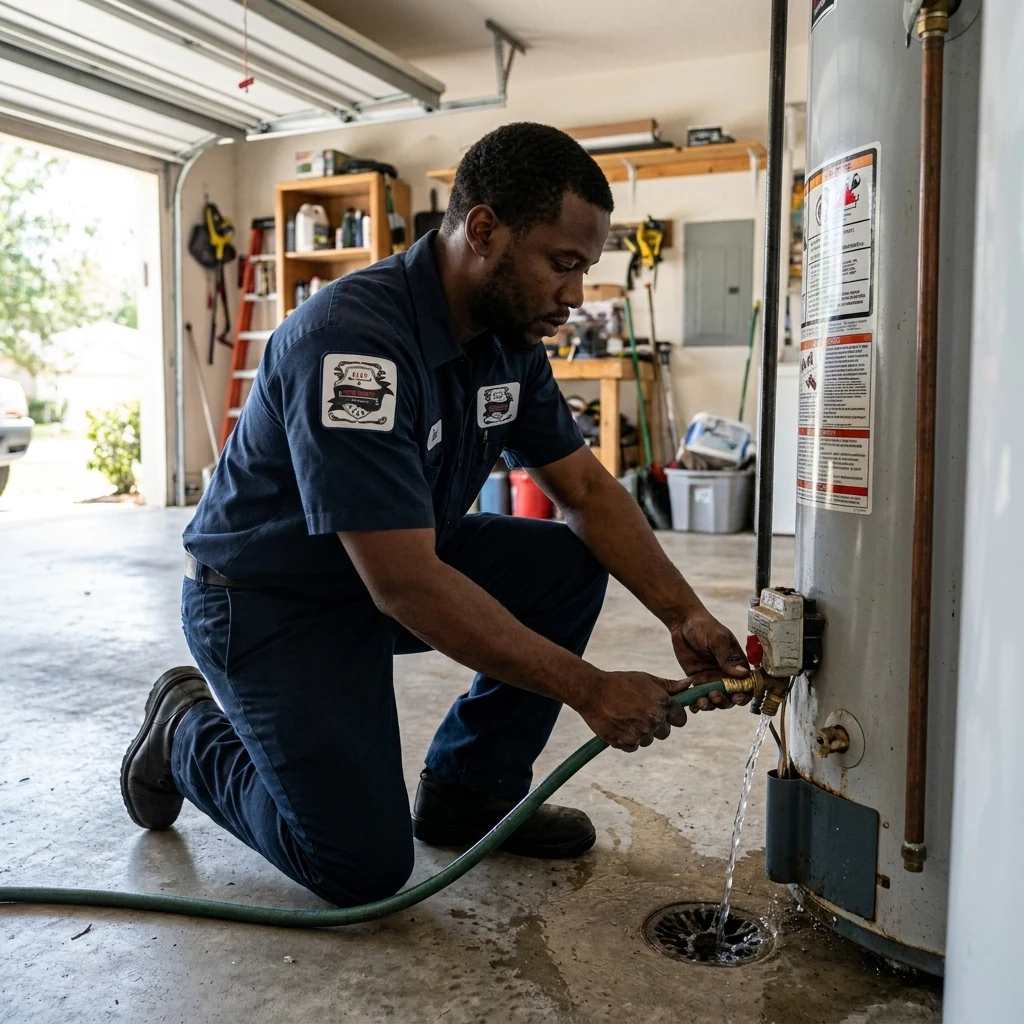
What Scale Does to a Heater
Minerals settle on the bottom of a tank and coat heating elements, so the element works harder and burns out sooner. In a tankless unit, scale narrows the heat exchanger. A descaling flush costs about $200–$400 every 12 to 24 months, and the InterNACHI chart gives tank heaters 6 to 12 years. If a test shows very hard water, a water-treatment dealer can size a softener; our job is repairing or replacing the heater and fixtures. See our water heater repair page and the repair or replace guide.
For everyday parts, the plumbing repairs page covers cartridge, flapper and supply-line work. The Seffner service area page has the local housing details, and the Temple Terrace page covers that city’s very hard water.
Fixtures wearing out faster than they should?
Bring us the part that failed. A flapper, cartridge or heater element tells us a lot, and we will say whether it looks like age, scale or a bad install before you buy another one.
CALL 813-733-7188Water Report and Fixture Questions
Hillsborough County does not publish a hardness figure for its South-Central system, so we cannot give you a number. Test strips or a lab test of your own tap are the reliable way. Neighboring Tampa and Temple Terrace both publish very hard figures, but those are different systems.
Chloramine is a disinfectant made from chlorine and ammonia. The county uses it because it lasts longer through the pipes than chlorine. The 2025 report lists an average of 3.8 ppm against a limit of 4.0 ppm.
The county adds a corrosion inhibitor to limit lead and copper leaching. Plumbers often see rubber parts age early, but no county study backs that up. If flappers or washers keep failing, replace them with parts rated for chloraminated water.
About every 12 to 24 months, usually costing $200–$400. The right interval depends on your water. Cloudy flushes, a rising error rate or reduced hot water flow suggest scale and are good reasons to schedule sooner.